

Menu
Potential USCIS Naturalization Fee Change 2026 - What It Could Mean and Why You Should File Now
Potential USCIS Naturalization Fee Change 2026: What It Could Mean and Why You Should File Now
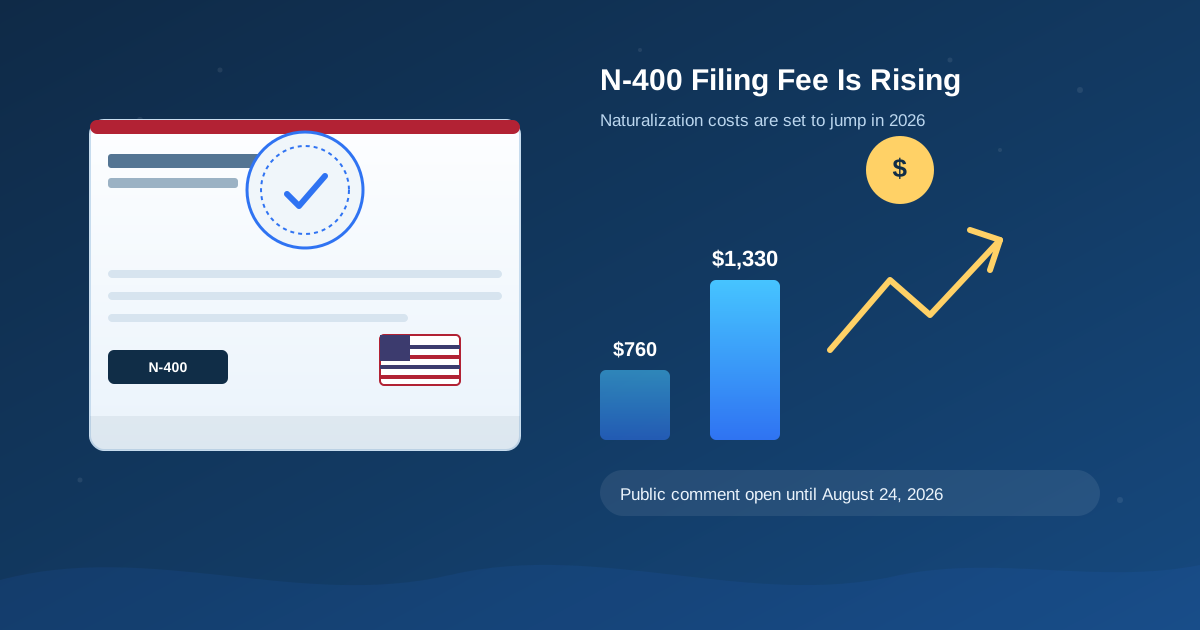
If you are a green card holder who has been putting off applying for U.S. citizenship, 2026 may be the year to stop waiting. USCIS has proposed a significant increase to the Form N-400 naturalization filing fee — and if it takes effect as written, the cost of becoming a U.S. citizen could nearly double for many applicants.
Here is what is changing, what it means for your wallet, and why timing your application now could save you hundreds of dollars.
What Is Changing
Under the proposed rule, the Form N-400 filing fee would increase as follows:
- Paper filing: $760 → $1,330
- Online filing: $710 → $1,280
In addition to the base fee increase, the proposal would eliminate reduced fees for many applicants who currently qualify for a lower rate based on income, and would narrow the circumstances under which a fee waiver is available.
The public comment period on the proposed rule remains open until August 24, 2026, after which USCIS can finalize and implement the new fee schedule.
Why This Matters
For a family of eligible green card holders, the difference between filing today and filing after the increase could mean hundreds to over a thousand dollars in additional costs. For applicants who currently qualify for a reduced fee based on income, losing that option entirely could be an even bigger financial hit.
This fee change comes at the same time USCIS is tightening other parts of the naturalization and adjustment of status process, including:
- A May 2026 policy memorandum reinforcing that adjustment of status is a discretionary form of relief, directing officers to evaluate the totality of an applicant's circumstances rather than approving cases as a formality.
- An interim final rule effective July 10, 2026, giving USCIS broader authority to reject or deny applications over technical signature errors — even after the case has been accepted and filing fees collected.
Taken together, these changes signal a period of increased cost and increased scrutiny for anyone applying for citizenship or permanent residency benefits in the coming months.
Who Should Consider Filing Now
You may want to move quickly on your N-400 if:
- You have already met the residency requirements for naturalization (generally 5 years as a green card holder, or 3 years if married to and living with a U.S. citizen spouse).
- You meet the continuous residence and physical presence requirements.
- You can demonstrate good moral character for the required statutory period.
- You have no pending issues that would delay approval, such as unresolved criminal history or extended travel outside the U.S.
Filing before a fee increase takes effect will not speed up processing times, but it can lock in the current, lower cost of your application.
What You Should Do Next
- Confirm your eligibility. Not everyone benefits from rushing — if you are close to meeting a residency requirement but not quite there, filing early could result in a denial rather than savings.
- Gather your documentation now. Tax records, travel history, and evidence of good moral character take time to compile. Starting early gives you the best shot at filing before any rule change takes effect.
- Watch the comment period. The rule is not final. It could change in scope, take effect on a delayed timeline, or be challenged in court — but applicants should not assume it will be reduced or withdrawn.
- Talk to an immigration attorney before you file. With USCIS applying more discretion and more technical scrutiny to every application, a small error — including something as simple as a signature — carries a higher risk of costly delay or denial than it did a year ago.
Get Help With Your Citizenship Application
Naturalization rules are shifting quickly in 2026, and the cost of getting it wrong — in money, time, and risk — is higher than it has been in years. If you are considering applying for U.S. citizenship, our team can help you evaluate your eligibility, prepare a complete application, and file before the current fee schedule changes.
Contact Ragheb Immigration Law today to schedule a consultation and find out if you should file now.