Menu
New USCIS Memo: How Child Support, Public Benefits, and Sponsorship Can Affect Your Citizenship Application
New USCIS Memo: How Child Support, Public Benefits, and Sponsorship Can Affect Your Citizenship Application
Good moral character has always been a requirement for U.S. citizenship, but what counts against an applicant has never been fixed. On November 4, 2026, USCIS issued Policy Memorandum PM-602-0201, which points officers to a specific set of financial conduct when deciding whether a green card holder has good moral character: supporting dependents, meeting obligations to an immigrant you sponsored, and how you obtained public benefits.
If you are a green card holder planning to apply for citizenship, and you have children, have sponsored a relative, or have received public benefits, this memo is worth understanding before you file.
What the Memo Covers
The memo is titled "Good Moral Character Determination: Failure to Support Dependents, Public Benefits, and Sponsorship through Affidavit or Declaration of Support." It focuses on three areas:
- Failure to support dependents. Officers may weigh an applicant's willful failure to financially support a dependent, such as unpaid child support, against a finding of good moral character.
- Sponsorship obligations. If you signed an Affidavit of Support (Form I-864) for a relative and did not meet the financial support obligations that come with it, USCIS may consider that when reviewing your own citizenship application.
- Public benefits. Officers may consider public benefits obtained through fraud or misrepresentation, or used in a way the memo describes as intentionally avoiding self-sufficiency.
What the Memo Does Not Do
Much of the early coverage has made this memo sound broader than it is. Based on the memo and how attorneys are reading it:
- Lawfully receiving public benefits is not, by itself, a bar to citizenship. An adverse finding is supposed to rest on specific conduct after an individualized review, not on poverty, disability, or lawful benefit receipt alone.
- It is not a new automatic disqualification. Good moral character is still a case-by-case determination that weighs negative factors against positive ones.
- It is not fully in effect for every officer yet. USCIS has said it will issue updated Policy Manual guidance and revise Form N-400 to collect more information about applicants' financial history and benefit use. Those changes have not all been published, and the details may shift when they are.
Who Should Be Paying Attention Right Now
- Green card holders with children they are legally required to support, especially if there is a child support order, past arrears, or a dispute over support.
- Anyone who has signed an Affidavit of Support for a spouse, parent, or other relative, including joint sponsors and household members who signed Form I-864A.
- Applicants who have received public benefits as permanent residents, particularly if there were any errors or inaccuracies on a benefits application.
- Refugees and asylees who received resettlement assistance, since advocacy groups are pressing USCIS to state clearly in the upcoming guidance that this assistance should not count against good moral character.
How to Prepare Your N-400
- Gather proof of support. If you have a child support order, collect payment records. If you support children informally, keep evidence such as receipts, transfers, or school and medical payments.
- Review any Affidavit of Support you signed. Know who you sponsored, when, and whether your obligation is still in effect.
- Pull your benefits history. Know which benefits you received, when, and on what basis, and make sure the information you gave the benefits agency was accurate.
- Fix problems before filing, not after. Catching up on support arrears or correcting a benefits issue before you apply is usually better than explaining it at the interview.
- Watch for the revised N-400. USCIS has said new form questions are coming. Use the form edition USCIS requires on the day you file.
Why Work With an Immigration Attorney Right Now
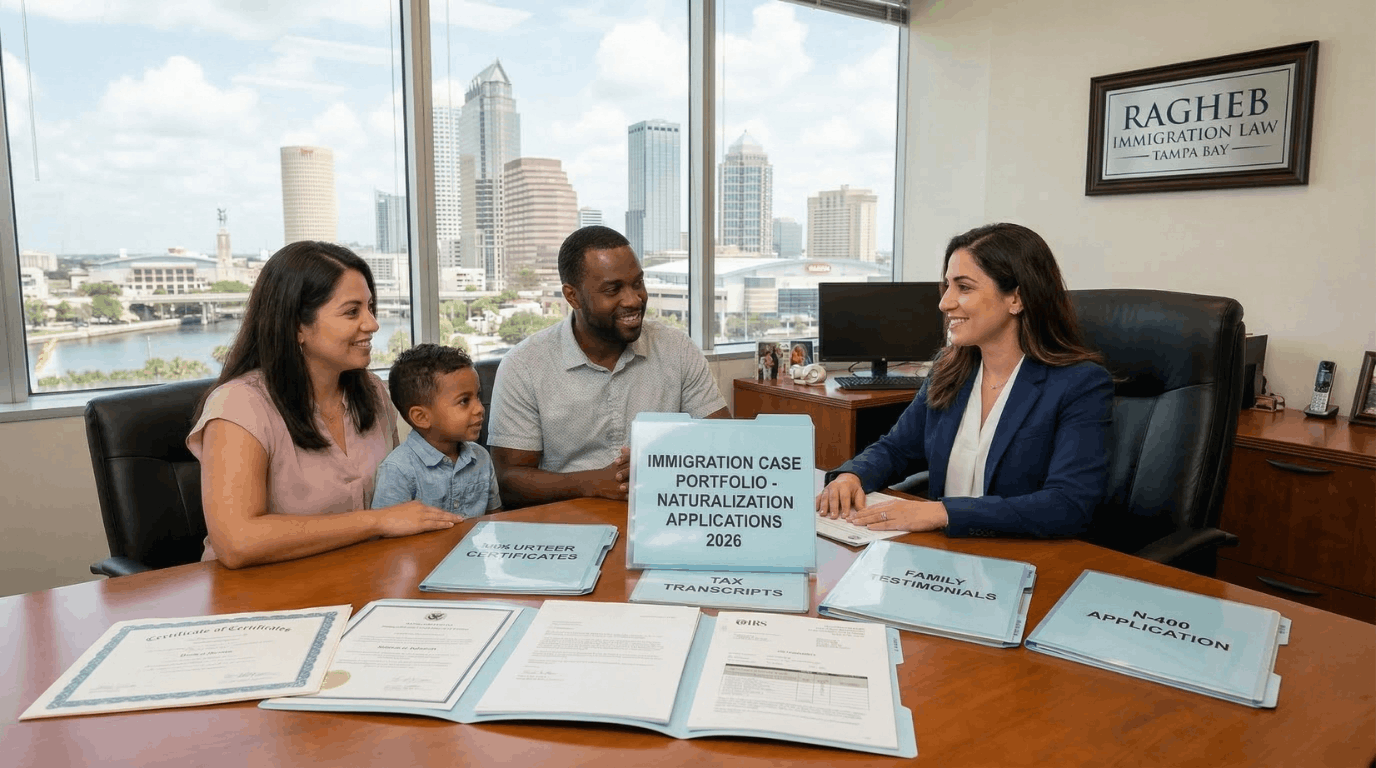
A citizenship denial for lack of good moral character can mean waiting years to reapply, and the conduct this memo targets is often easy to explain or fix with the right documentation. At Ragheb Law, PLLC, we review applicants' family support, sponsorship, and benefits history before filing so there are no surprises at the interview.
Planning to Apply for Citizenship?
If you have children you support, have sponsored a relative, or have received public benefits, contact our office before you file your N-400. We can review your history under the new memo and help you put together the evidence you need.
Tags
- Good Moral Character
- USCIS Policy Memo 2026
- N-400 Naturalization
- Affidavit of Support
- Public Benefits and Citizenship
- Tampa Immigration Lawyer