

Menu
USCIS Can Now Deny Your Application With No RFE and No Warning: What Changed on August 5, 2026
USCIS Can Now Deny Your Application With No RFE and No Warning: What Changed on August 5, 2026
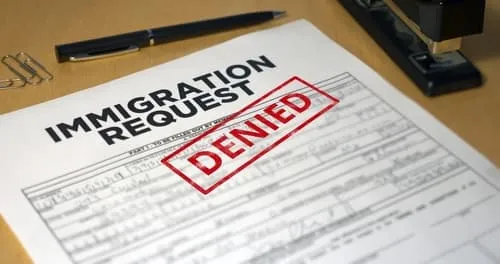
For years, an incomplete or thin USCIS filing usually meant a Request for Evidence (RFE) or a Notice of Intent to Deny (NOID) — a formal second chance to fix the problem before a decision was made. On August 5, 2026, that safety net got a lot smaller. USCIS updated its Policy Manual to give officers broad discretion to deny a case outright, with no RFE and no NOID, if the initial filing does not establish eligibility.
If you have a pending application, or are about to file one, this is the single most important procedural change to understand right now.
What Actually Changed
Through Policy Alert PA-2026-05, USCIS revised the Policy Manual sections governing evidence, denials, and post-decision actions. The core shift:
- Officers may deny a benefit request without issuing an RFE or NOID first if required initial evidence is missing or the record does not establish eligibility.
- The change took effect immediately on August 5, 2026, and applies to filings already pending as well as new ones — it is not limited to applications submitted after that date.
- The regulatory maximum response windows are unchanged — up to 12 weeks for an RFE and up to 30 days for a NOID — but officers are no longer required to use the full window, or to issue one at all.
- Some categories retain more built-in protection, including asylum and refugee applications, where an interview is still required before a grant or denial. Most other benefit types do not have that same cushion.
In plain terms: USCIS is reverting to a standard where the burden is on the applicant to file a complete, eligibility-establishing case the first time. Filing and hoping an officer will ask for what's missing is no longer a safe assumption.
Why This Is a Big Deal
This is not a paperwork technicality — it changes how much risk sits in every single filing.
- There is often no do-over. A denial under this policy is a final decision, not a request for more information. Fixing the problem may mean refiling from scratch, paying the fee again, and losing your original priority or filing date in categories where that matters.
- It applies broadly. This is not limited to one visa category or one form. Family-based petitions, employment-based petitions, adjustment of status, and other benefit requests can all be affected.
- It reaches pending cases. If you filed months ago and assumed a thin exhibit list would simply trigger a request for more documents, that assumption no longer holds for cases still awaiting a decision.
- Officers still have discretion. This is not a mandate to deny every imperfect case — RFEs and NOIDs are still allowed. But the policy explicitly tells requestors not to assume they will get the chance to cure a deficiency after filing.
Who Should Be Paying Attention Right Now
- Anyone with a pending petition or application filed before August 5, 2026 that they know was light on documentation.
- Anyone preparing to file a new I-130, I-485, I-140, N-400, or other benefit request in the coming weeks.
- Employers and petitioners handling employment-based filings, where missing wage, corporate, or ability-to-pay documentation has historically been the most common RFE trigger.
- Families assembling marriage-based or family-preference petitions, where bona fides evidence is often submitted incrementally rather than all at once.
If any of that describes your situation, the filing you submit needs to be complete on day one — not "complete enough to get a request for more."
What "Establishing Eligibility at Time of Filing" Actually Means
The safest way to think about this policy is that USCIS is no longer treating the initial filing as a starting point in a conversation. It is treating it as the case. That means:
- Every required document needs to be included, not referenced as "available upon request."
- Evidence needs to affirmatively prove each eligibility element, not just avoid contradicting it.
- Explanatory context matters. A gap in employment history, an inconsistency between forms, or a missing certified translation is exactly the kind of thing that used to generate an RFE and can now generate a denial instead.
- Consistency across the full record matters. Officers comparing your filing against prior filings, prior travel, or other government records will not necessarily flag a discrepancy for clarification before deciding against you.
What to Do If You Have a Case Pending Right Now
- Do not assume silence means things are fine. A pending case with known documentation gaps is a real risk under this policy, not a hypothetical one.
- Consider submitting supplemental evidence proactively where the rules allow it, rather than waiting to be asked.
- Have an attorney audit what was filed against what the category actually requires, so you know where the exposure is before USCIS decides, not after.
- If a denial does arrive, act immediately. Depending on the benefit type, there may be a path to a motion to reopen or reconsider, an appeal, or a new filing — but the options and deadlines differ sharply by case type and get narrower the longer you wait.
What to Do Before You File Anything New
- Treat the initial filing as your only shot, not the first draft of a conversation with USCIS.
- Build the evidence package to independently prove every eligibility requirement, including the ones that seem obvious.
- Get supporting documents translated, certified, and organized before submission — not gathered reactively after a request that may no longer come.
- Have the full filing reviewed before it goes out the door. The cost of a careful review is small next to the cost of a denial, a lost filing fee, and a lost place in line.
Why Work With an Immigration Attorney Right Now
This policy shift moves the highest-stakes decision in the entire process — whether your case even gets a second look — to the moment you hit submit. There is far less room than before for a document to be added later, an explanation to be offered after the fact, or a gap to be caught and cured mid-process.
At Ragheb Immigration Law, we build filings to withstand a first-look denial standard, not just to survive an eventual request for more evidence. For clients with cases already pending, we review what was filed now, while there is still time to act, rather than waiting for a decision to tell us where the gaps were.
Worried About a Pending Case or an Upcoming Filing?
If you have an application sitting with USCIS and are not certain it was filed complete, or you are preparing to file and want it done right the first time, contact our office. Under this policy, preparation before filing matters more than it has in years — and that is exactly where the right guidance changes the outcome.
Tags
- USCIS Policy Update 2026
- RFE and NOID Changes
- USCIS Denials
- Adjustment of Status
- Employment-Based Immigration
- Tampa Immigration Lawyer