

Menu
Indefinite Pause - The US Immigrant Visa Ban affecting 75 Countries
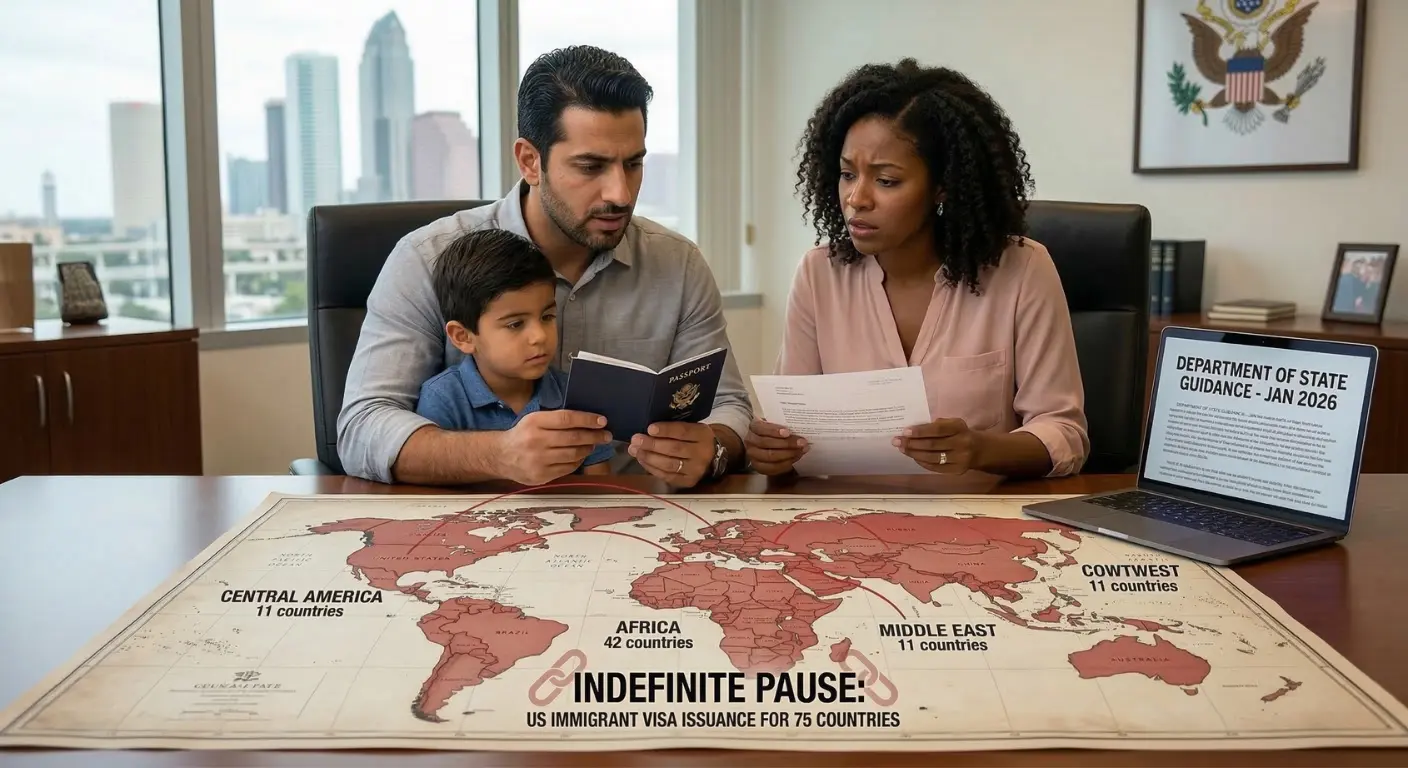
Indefinite Pause: The US Immigrant Visa Ban affecting 75 Countries
The landscape of U.S. immigration shifted dramatically in early 2026. While much attention has been paid to full travel bans, a separate, parallel policy has created a quieter, but equally devastating, bottleneck for families and workers worldwide. Effective January 21, 2026, the U.S. Department of State (DOS) issued an indefinite pause on the issuance of immigrant visas for nationals of 75 specific countries.
At Ragheb Immigration Law, we understand that this policy has caused immense confusion and anxiety for our clients in Tampa Bay who are waiting to reunite with spouses, children, parents, and essential employees located abroad.
What is this Policy and Why is it Happening?
This is not a traditional "travel ban" based on national security vetting. Instead, the State Department’s directive is premised on "public charge" concerns.
The DOS guidance suggests that nationals from these 75 designated countries are, solely based on their nationality, more likely to become financially dependent on the U.S. government (a "public charge") after arrival. The pause is designed to allow the government time to review and update its screening procedures to better assess an applicant’s financial stability.
It is important to note that this policy primarily affects immigrant visas—those that lead to lawful permanent residence (green cards)—processed at U.S. embassies and consulates abroad.
The 75 Countries Facing the Immigrant Visa Pause
The list of affected countries is extensive and includes nations from every continent. If you are a citizen of one of the following countries applying for an immigrant visa outside the United States, your application is likely paused indefinitely:
- Afghanistan
- Albania
- Algeria
- Antigua and Barbuda
- Armenia
- Azerbaijan
- Bahamas
- Bangladesh
- Barbados
- Belarus
- Belize
- Bhutan
- Bosnia and Herzegovina
- Brazil
- Burma (Myanmar)
- Cambodia
- Cameroon
- Cape Verde
- Colombia
- Congo (Democratic Republic of the)
- Congo (Republic of the)
- Cote d'Ivoire
- Cuba
- Dominica
- Egypt
- Eritrea
- Ethiopia
- Fiji
- Gambia (The)
- Georgia
- Ghana
- Grenada
- Guatemala
- Guinea
- Haiti
- Iran
- Iraq
- Jamaica
- Jordan
- Kazakhstan
- Kosovo
- Kuwait
- Kyrgyz Republic
- Laos
- Lebanon
- Liberia
- Libya
- Moldova
- Mongolia
- Montenegro
- Morocco
- Nepal
- Nicaragua
- Nigeria
- North Macedonia
- Pakistan
- Russia
- Rwanda
- Saint Kitts and Nevis
- Saint Lucia
- Saint Vincent and the Grenadines
- Senegal
- Sierra Leone
- Somalia
- South Sudan
- Sudan
- Syria
- Tanzania
- Thailand
- Togo
- Tunisia
- Uganda
- Uruguay
- Uzbekistan
- Yemen
Who is Still Affected (and Who is Exempt)?
This policy has severe implications for family-based immigration. The DOS guidance has confirmed that there are no automatic exceptions for spouses or minor children of U.S. citizens located abroad in these countries.
However, there are crucial nuances to understand:
- Dual Nationals: You may be exempt if you are a citizen of both a banned country and a non-banned country, and you are applying for the immigrant visa using the passport of the non-banned country.
- Adjustment of Status (Within the US): At this time, U.S. Citizenship and Immigration Services (USCIS) has not announced a corresponding pause in adjudicating Form I-485 applications for adjustment of status. If you are already physically present in the U.S. and legally eligible to adjust status, you may still become a permanent resident.
- Scheduled Interviews: Individuals who had immigrant visa interviews scheduled prior to January 21, 2026, were advised to attend, and some visas may have been issued. For interviews scheduled after that date, the visa issuance itself is paused.
Moving Forward: Tactical Advice
Given that the DOS expects nationals of these countries to struggle with public charge requirements, applicants should be prepared to over-prepare. We recommend that all applicants from these countries carry robust proof of finances to any future visa interviews to overcome this new presumption of inadmissibility. This includes:
- Recent bank statements.
- Proof of investment accounts.
- Job offer letters from U.S. employers (if applicable).
- A strong Affidavit of Support (Form I-864) from their U.S. sponsor.
Because this policy is indefinite and based on complex interpretations of public charge law, consulting an experienced Tampa immigration attorney is vital to develop a specific strategy for your case.
Tags
- Visa Ban
- Public Charge
- Family Immigration
- Consular Processing
- USCIS Updates
- Legal Advice Tampa