Menu
Proving Good Moral Character for Naturalization in 2026
Proving "Good Moral Character" in 2026: The New Standard
To become a U.S. citizen, one of the most critical requirements is demonstrating Good Moral Character (GMC). In 2026, this requirement has become more than just a lack of a criminal record. Following the major policy shifts of the last year, USCIS now utilizes a "holistic" review process.
At Ragheb Immigration Law, we help Tampa families move from "eligible" to "approved" by building a robust body of evidence that shows you are a person of high integrity.
What is the "Holistic" Standard?
Under current 2026 guidelines, USCIS officers don't just look for "statutory bars" (crimes that automatically disqualify you). They now look at the "totality of the circumstances." This means even if you have never been arrested, you must proactively prove that your character is at least as good as the average citizen in your community.
The officer will weigh any negative factors (like a single old traffic ticket) against the "positive equities" in your life.
Essential Evidence for Your GMC Packet
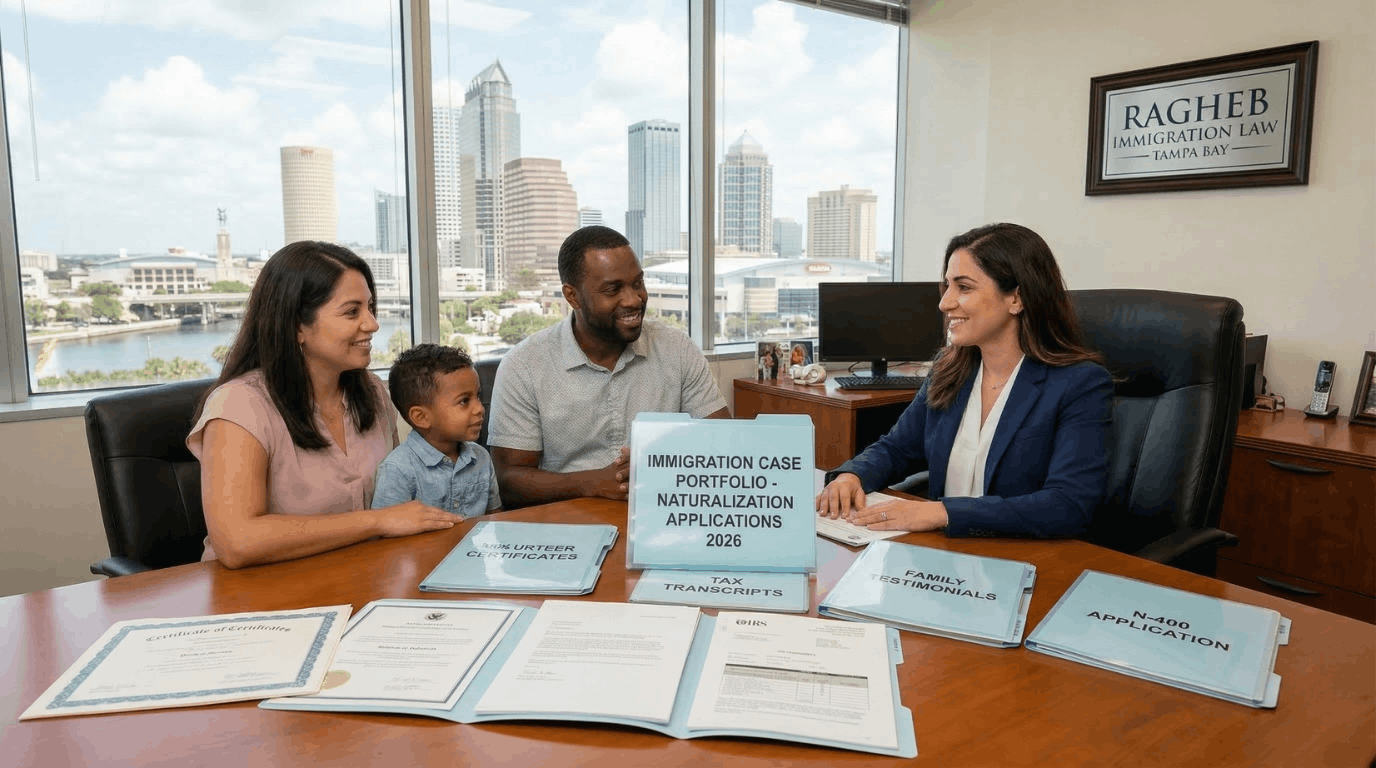
To win your case in today's stricter environment, we recommend including evidence in these four key categories:
1. Financial Integrity and Responsibility
USCIS views tax compliance as a primary indicator of moral character.
- IRS Tax Transcripts: Certified transcripts for the last 5 years (or 3 years if applying based on marriage).
- Proof of Child Support: If you have children living outside your home, you must provide proof of timely payments.
- Debt Management: If you have back taxes, provide the official payment plan agreement and proof that you are following it.
2. Community Involvement and "Good Neighbor" Evidence
In a holistic review, being a "good person" matters.
- Letters of Recommendation: Affidavits from neighbors, employers, or church leaders attesting to your honesty and helpfulness.
- Volunteer Records: Certificates or letters from local Tampa non-profits, food banks, or school PTAs.
- Professional Awards: Any recognition you have received at work for excellence or leadership.
3. Family Ties and Caregiving
- Support of Dependents: Evidence that you provide for your family, including school records for children or medical records if you care for an elderly parent.
- Stability: Proof of long-term residence or homeownership in the Tampa Bay area.
4. Rehabilitation (If you have a past mistake)
If you have a dismissed arrest or a "minor" conviction from years ago, you must show you have changed.
- Certified Court Dispositions: Never go to an interview without the official court result of every interaction with police.
- Rehabilitation Certificates: Completion of counseling, safe driving courses, or educational degrees obtained since the incident.
2026 Warning: Marijuana and Social Media
Even in 2026, marijuana remains a federal controlled substance. Admitting to its use—even in states where it is legal—can lead to a finding of "lack of good moral character." Additionally, USCIS officers are increasingly authorized to review public social media profiles for evidence of "anti-American" activities or membership in extremist groups.
How Ragheb Immigration Law Can Help
Proving your character is a subjective process. One officer may see a mistake differently than another. We specialize in "character advocacy," ensuring your N-400 application tells a story of a person who will make the United States a better place.
Tags
- Citizenship
- Naturalization
- Good Moral Character
- USCIS News
- Tampa Legal Advice