

Menu
Marriage-Based Green Card in 2026 - The Complete Step-by-Step Guide
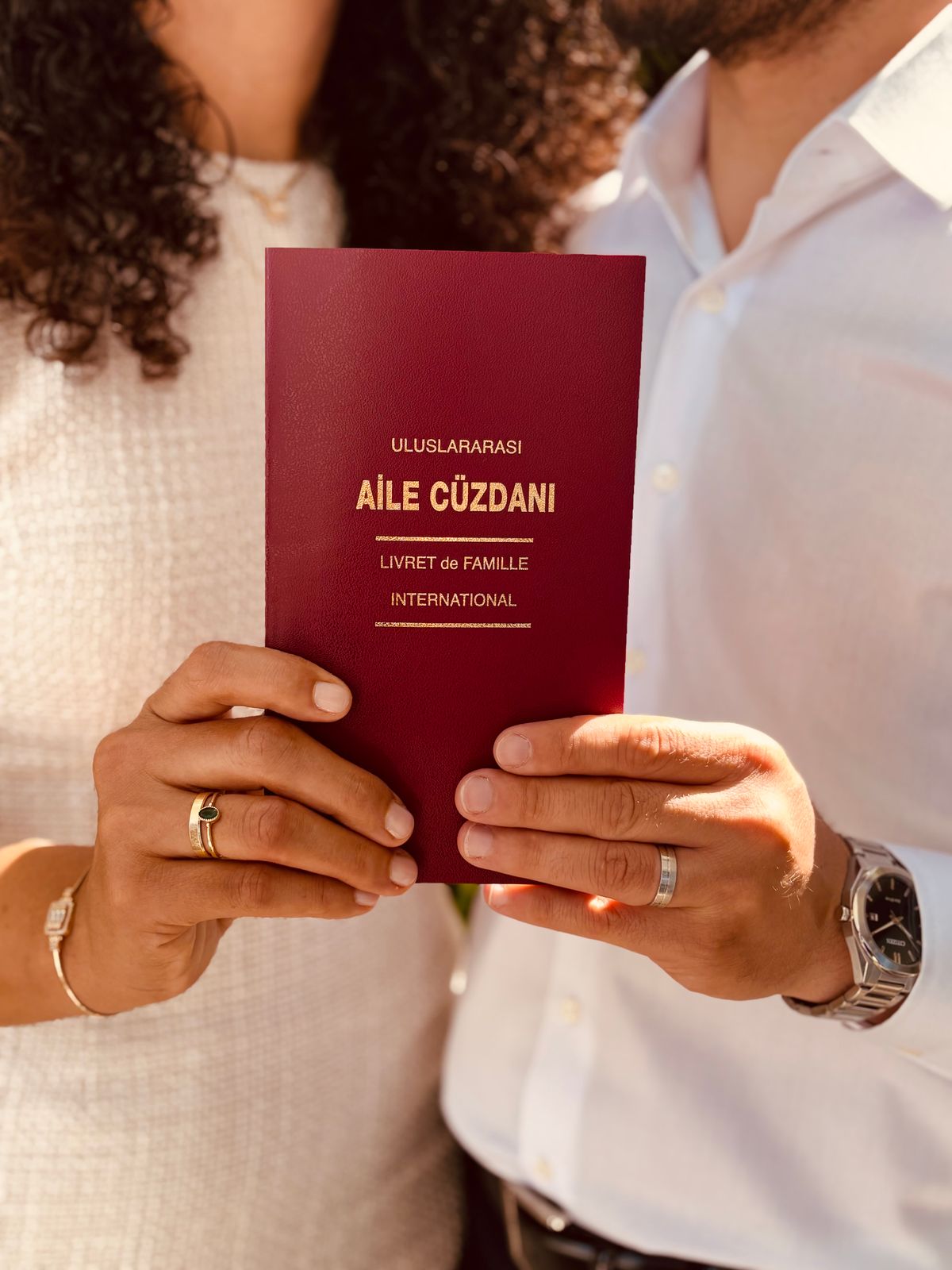
Marriage-Based Green Card in 2026: The Complete Step-by-Step Guide
Marriage to a U.S. citizen or lawful permanent resident is one of the most traveled paths to a green card in the United States. In 2025, over 250,000 people received permanent residency through a spousal relationship — making it the single largest category of green card approvals.
But the process is not as simple as filing one form and waiting. It involves multiple government agencies, extensive documentation, a formal interview, and — depending on your situation — timelines that can range from eight months to several years.
This guide walks you through every stage of the process as it stands in 2026, including what has changed, what to watch out for, and how to give your application the best possible chance of success.
Who Qualifies for a Marriage-Based Green Card?
To qualify, you must be legally married to either:
- A U.S. citizen, or
- A lawful permanent resident (green card holder)
The marriage must be legally valid in the country or state where it took place, and it must be a bona fide marriage — meaning entered into in good faith, not solely for immigration purposes.
Same-sex marriages are fully recognized for immigration purposes following the Supreme Court's ruling in Obergefell v. Hodges and subsequent federal policy implementation.
Two Tracks: Immediate Relative vs. Preference Category
Spouse of a U.S. citizen → You are classified as an Immediate Relative. There is no annual cap on Immediate Relative visas. This means once your petition is approved, you do not have to wait for a visa number to become available. This is the fastest path.
Spouse of a lawful permanent resident (green card holder) → You fall under the F-2A preference category. There is an annual cap on these visas, which means there can be a waiting period — sometimes over a year — before your priority date becomes current and you can proceed with the next steps.
The Two Main Pathways
How you apply depends on where you are living:
Pathway 1: Adjustment of Status (If You Are Already in the U.S.)
If your spouse is already physically present in the United States, you can apply for a green card without leaving the country through a process called Adjustment of Status (filing Form I-485).
Pathway 2: Consular Processing (If Your Spouse Is Abroad)
If your spouse lives outside the United States, the process goes through a U.S. embassy or consulate in their home country. This is called consular processing, and it results in an immigrant visa (CR-1 or IR-1) that allows your spouse to enter the U.S. as a permanent resident.
We will cover both pathways below.
Step-by-Step: Adjustment of Status (Inside the U.S.)
Step 1: File Form I-130 (Petition for Alien Relative)
The process begins with the U.S. citizen or permanent resident spouse — called the petitioner — filing Form I-130 with U.S. Citizenship and Immigration Services (USCIS).
This form establishes the qualifying relationship. You must submit:
- The completed I-130 form
- Proof of U.S. citizenship or permanent residence (passport, naturalization certificate, or green card)
- Your marriage certificate
- Proof that any prior marriages were legally terminated (divorce decrees, death certificates)
- Passport-style photos of both spouses
- The filing fee ($675 as of 2026 — fee schedules may change; verify on uscis.gov)
If you are a U.S. citizen petitioning for your spouse, you can file the I-130 concurrently with the I-485 (see Step 2). This saves time.
Processing time: I-130 approvals typically take 6 to 12 months in 2026, though USCIS processing times fluctuate. Check current processing times at uscis.gov.
Step 2: File Form I-485 (Application to Register Permanent Residence)
Once the I-130 is approved — or filed concurrently if you are the spouse of a citizen — the foreign national spouse files Form I-485, the core green card application.
Along with the I-485, you will typically file:
- Form I-864 (Affidavit of Support) — the petitioner must demonstrate they can financially support the applicant at 125% of the federal poverty level
- Form I-765 (Application for Employment Authorization) — allows the applicant to work legally while the green card is pending
- Form I-131 (Application for Travel Document/Advance Parole) — allows travel outside the U.S. while the green card is pending without abandoning the application
- Medical examination results on Form I-693 (completed by a USCIS-designated civil surgeon)
- Two passport-style photos
- Copy of passport and any prior visas
- Police clearance certificates if you have lived outside the U.S. for extended periods
Filing fee: The I-485 package fee is $1,440 for most applicants in 2026 (includes biometrics). Fee waivers are available in limited circumstances.
Step 3: Biometrics Appointment
After filing, USCIS will schedule a biometrics appointment at an Application Support Center (ASC). You will provide fingerprints, a photo, and a signature. This is used for background checks.
Timeline: Usually within 4–8 weeks of filing.
Step 4: Work Permit and Travel Document
If you filed Form I-765 and I-131 with your I-485, you should receive your Employment Authorization Document (EAD) and Advance Parole travel document while your green card is pending.
In 2026, USCIS is issuing combined EAD/Advance Parole cards. Processing times have been running 4 to 7 months, though this changes. Do not travel outside the U.S. without Advance Parole while your I-485 is pending — doing so can result in abandonment of your application.
Step 5: The Green Card Interview
Once USCIS has completed its background checks and your case is ready, you will be scheduled for an interview at your local USCIS field office.
Both spouses must attend. The interviewing officer will:
- Review the original documents you submitted
- Ask questions about your relationship, how you met, your daily life together, your finances, and your immigration history
- Assess whether the marriage is genuine
What to bring:
- Government-issued photo ID for both spouses
- Original marriage certificate
- Original supporting documents (lease agreements, joint bank statements, joint insurance, photos together, travel records, correspondence)
- Any previously issued immigration documents
- Tax returns filed jointly (if applicable)
How to prepare: Review your application together before the interview. Be honest. Inconsistencies — even innocent ones — can raise red flags. An attorney can conduct a mock interview to help you prepare.
Interview outcome: In most cases, the officer will approve the case at the end of the interview or send a notice of approval shortly after. In some cases, the officer may issue a Request for Evidence (RFE) or refer the case for further review.
Step 6: Conditional vs. Permanent Green Card
If you have been married for less than two years at the time your green card is approved, you will receive a conditional green card valid for 2 years (CR-1 or CR-2 status).
Before that 2-year green card expires, you must file Form I-751 (Petition to Remove Conditions on Residence) — jointly with your spouse — to prove the marriage is still ongoing and bona fide.
If you have been married for more than two years at approval, you receive a 10-year permanent green card immediately.
Step-by-Step: Consular Processing (Outside the U.S.)
Step 1: File Form I-130
Same as above. The U.S. citizen or permanent resident files the I-130 petition with USCIS.
Step 2: NVC Processing
After USCIS approves the I-130, the case is transferred to the National Visa Center (NVC). The NVC:
- Assigns a case number
- Collects fees
- Collects civil documents (birth certificate, police certificates, marriage certificate)
- Collects the Affidavit of Support (Form I-864)
- Once all documents are submitted and reviewed, schedules the immigrant visa interview at the U.S. consulate
NVC processing time: Typically 3 to 6 months, but can be longer depending on document review backlogs.
Step 3: Medical Examination Abroad
The applicant must complete a medical examination with a USCIS-approved physician (called a "panel physician") in their home country. Results are submitted directly to the consulate.
Step 4: Consular Interview
The applicant attends a visa interview at the U.S. embassy or consulate in their country. The consular officer reviews the application, asks questions about the relationship, and determines whether to issue the immigrant visa.
If approved, the applicant receives a CR-1 or IR-1 immigrant visa stamped in their passport.
- CR-1 (Conditional Resident): Married less than 2 years
- IR-1 (Immediate Relative): Married 2 or more years → leads to 10-year green card
Step 5: Entry into the United States
The applicant enters the U.S. with the immigrant visa. Upon entry, they are processed as a lawful permanent resident. The physical green card is mailed to their U.S. address within a few weeks.
How Long Does the Whole Process Take in 2026?
Spouse of U.S. citizen (inside U.S. — Adjustment of Status): 12 to 24 months total, depending on USCIS workload and your local field office.
Spouse of U.S. citizen (outside U.S. — Consular Processing): 12 to 18 months in most cases, though embassies in some countries have significant backlogs.
Spouse of permanent resident (F-2A category): Add an additional waiting period depending on the current visa bulletin priority date — can range from 12 to 30+ months on top of petition processing.
Common Reasons Applications Are Delayed or Denied
1. Insufficient Evidence of a Bona Fide Marriage
This is the most common issue. Submit extensive, consistent evidence of a real, ongoing relationship.
2. Prior Immigration Violations
Unlawful presence of more than 180 days, prior removal orders, or misrepresentation on prior applications can all create bars to approval. An attorney can assess these issues before you file.
3. Criminal History
Certain criminal convictions — including crimes involving moral turpitude, drug offenses, and domestic violence — can render an applicant inadmissible. An attorney must evaluate this before filing.
4. Public Charge Grounds
Since 2020 policy changes, USCIS evaluates whether applicants are likely to become primarily dependent on public benefits. A strong Affidavit of Support and demonstrated financial stability are essential.
5. Incomplete or Inconsistent Applications
Missing documents, unsigned forms, fees not included, or inconsistencies between the I-130 and I-485 are common causes of delay.
What Evidence of a Genuine Marriage Should You Include?
The more evidence, the better. Strong applications include:
- Joint bank account statements (12+ months)
- Joint lease or mortgage
- Joint utility, cable, or insurance accounts
- Joint tax returns
- Photos together over multiple years and occasions (include captions with dates and locations)
- Travel records showing trips taken together
- Communications (emails, texts — print relevant excerpts)
- Affidavits from people who know you as a couple (friends, family, coworkers)
- Evidence of shared social media presence
- Children's birth certificates, if applicable
Do not simply submit what is required — submit what tells the story of your real relationship.
Why Work With an Immigration Attorney?
Marriage-based green card cases are often described as "straightforward" — and when everything goes right, they can be. But USCIS denial rates for I-485 cases have increased in recent years. Requests for Evidence (RFEs) are more common. Interview denials happen.
An experienced immigration attorney can:
- Review your eligibility and identify potential issues before you file
- Prepare a thorough, well-documented application package
- Respond to RFEs effectively
- Prepare you for the green card interview
- Represent you if your case is denied and you need to appeal
At Ragheb Immigration Law, we handle marriage-based green card cases throughout Tampa Bay — including cases involving prior immigration violations, criminal history, prior denials, and consular processing in countries with difficult embassy environments.
Ready to Start?
If you are married to a U.S. citizen or permanent resident and want to understand your path to a green card, contact our office for a consultation. We will review your specific situation, explain your options clearly, and help you move forward with confidence.
The process starts with a conversation. Schedule yours today.
Tags
- Marriage-Based Green Card 2026
- Spousal Green Card
- I-130 Petition
- Adjustment of Status
- Consular Processing
- Tampa Immigration Lawyer
- Green Card Through Marriage
- Family Immigration Florida