

Menu
Permanent Visas
Permanent Visas
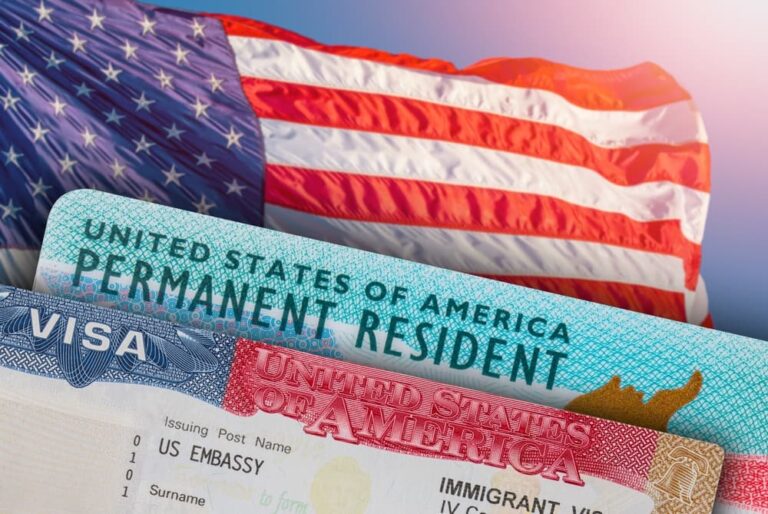
Many people around the world dream of getting a permanent visa to live and work in the United States. A permanent visa, often called an “immigrant visa,” can eventually lead to a green card. However, the journey can be confusing, with different categories, forms, and government agencies involved.
Never hesitate to consult an immigration attorney for assistance with the visa application process.
What Are Permanent Visas and Why Do They Matter?
A permanent visa allows you to live in the United States indefinitely. In most cases, once you enter the U.S. on an immigrant visa, you can become a lawful permanent resident (LPR). This means you can legally work, attend school, and enjoy many other benefits. The Immigration and Nationality Act (INA) outlines these rules, and federal statutes like 8 U.S.C. § 1202 (Application for visas) describe what info you must submit. If you are granted a permanent visa, it’s a huge step toward a more secure life in the United States.
Still, a visa does not guarantee automatic entry or permanent status. If you arrive at a U.S. port of entry and border officials decide you are inadmissible—for example, because of certain health or security concerns—they can still deny you. That’s why preparing a solid application is important.
Which Permanent Visa Categories Are Out There?
U.S. immigration law offers several categories of permanent visas, each with its own rules. For instance, 8 U.S.C. § 1255 talks about adjusting your status to permanent resident if you already live in the U.S. Below are common categories:
Immediate Relatives (IR)
This includes spouses, unmarried children under 21, or parents of a U.S. citizen. There is no annual limit on these visas, making them one of the fastest routes.
Family Preference Categories (F1, F2, F3, F4)
These categories cover adult children, married children, or siblings of U.S. citizens, and spouses or children of lawful permanent residents. Each category has numerical limits every year.
EB-1
Designed for people with “extraordinary ability” in fields like science, education, business, or the arts. It also covers some outstanding professors and multinational managers.
EB-2
Aimed at individuals with advanced degrees or special abilities in the arts, sciences, or business.
EB-3
Intended for skilled workers, professionals, or certain unskilled workers. You typically need a job offer and may require a labor certification to prove no qualified U.S. worker is available.
Special Immigrant Visas
This includes religious workers, certain employees of the U.S. government abroad, and other unique groups.
Diversity Visa (DV) Lottery
The DV program issues a limited number of visas each year to applicants from countries with low immigration rates to the United States.
Other Categories
Additional routes exist for cases such as abused spouses or children under the Violence Against Women Act (VAWA), as well as various humanitarian situations. Each category comes with its own eligibility requirements.
How Do You Apply for a Permanent Visa?
The first step often involves having a family member or an employer sponsor you. For family-based applications, this typically means filing Form I-130 with U.S. Citizenship and Immigration Services (USCIS). In the employment context, you might file Form I-140, especially for categories requiring a job offer.
- Waiting for Approval and a Visa Number
- Consular Processing or Adjustment of Status
- Biometrics and Medical Exams
- Interview
- Gathering Documents
- Filing the Correct Forms
- Checking Visa Availability
- Attending Interviews
- Monitoring Case Status
Should You Hire an Immigration Attorney to Apply?
Yes. An immigration lawyer can guide you in several ways:
- Choosing the Right Visa: An immigration attorney can determine if you qualify for a family-based or employment-based visa, or if you should explore something like the EB-1 for extraordinary ability.
- Filing Correct Paperwork: Even small errors on forms can lead to big problems. A lawyer can spot these mistakes early.
- Dealing with Setbacks: If USCIS asks for more evidence or denies your case, a lawyer can respond with legal arguments or file an appeal.
Given how complicated the law can be, the cost of not having an immigration lawyer might be far higher than any legal fees.
Tags
- Permanent Visa
- Green Card
- Immigrant Visa
- EB-1
- EB-2
- Family Preference